Does your High-temperature silicone ink pass food-contact safety tests for kitchenware?
- VIP-User
- 2026-07-03
- 39
High-temperature silicone ink, formulated for screen and transfer printing, requires specific baking processes to cure. While it features high coloring power and excellent physical adhesion on silicone rubber cables, medical tubes, and buttons, standard formulations must undergo specific safety testing to verify compliance with food-contact regulations before use on kitchenware.
Core Solutions & Key Takeaways
- Process Requirements: High-temperature baking silicone ink (such as model SCL-00YM) requires strict temperature control during the curing phase to ensure chemical stability.
- Substrate Compatibility: Highly suitable for silicone-based consumer goods, medical tubes, baby bottle nipples, and various silicone rubber buttons.
- Safety Verification: Compliance with food-contact standards depends on the final cured state and chemical safety testing reports like CNAS.
- Application Scenarios: Widely applied across cosmetics packaging, 3C electronics, and food and beverage packaging, including bottle caps and silicone kitchen utensils.
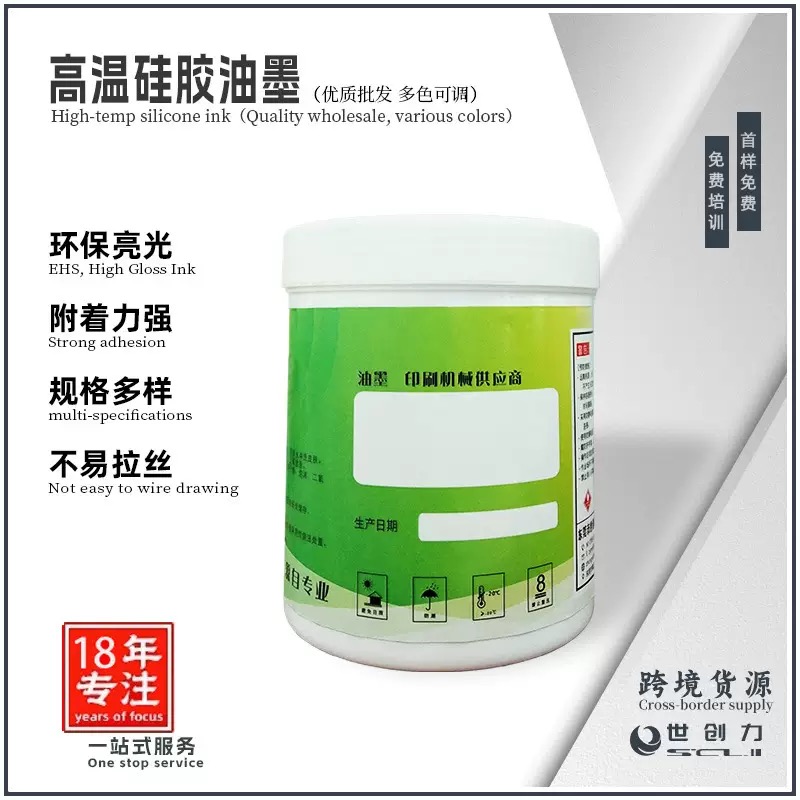
This ink formulation features a fineness of 8 um and a viscosity of 100 S, ensuring smooth distribution during screen printing. Achieving food-grade safety depends heavily on the complete volatilization of carriers and correct baking parameters during production.
Detailed Architectural & Technical Analysis
The chemical stability of high-temperature silicone ink relies on its cross-linking density. During the curing process, high-temperature baking initiates polymerization, transforming the liquid ink into a highly stable, inert silicone polymer matrix. Shichuangli maintains strict quality control over raw materials, ensuring the ink remains free from restricted hazardous substances. This makes it highly reliable for marking and labeling applications on medical tubes, pen covers, and silicone rubber cables.
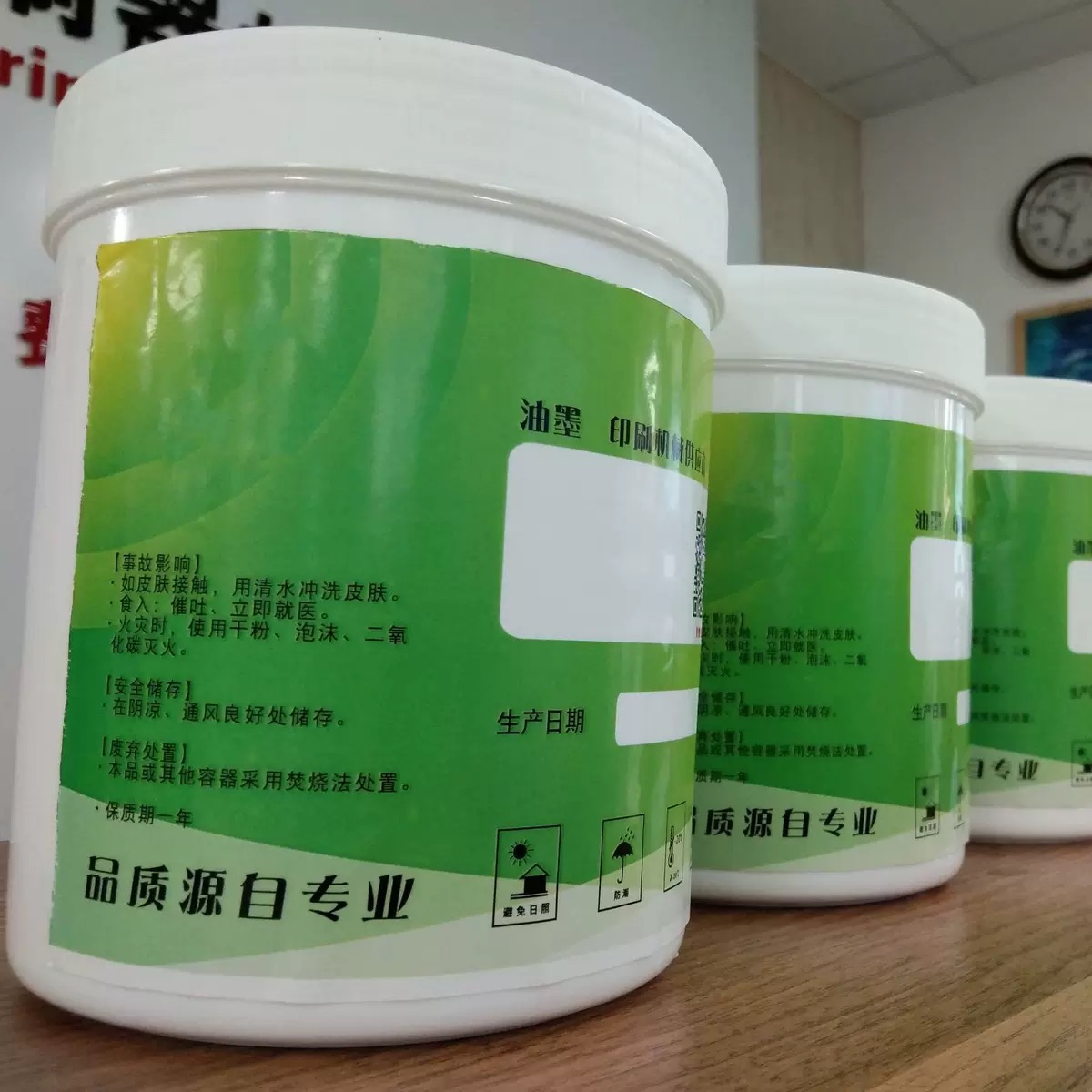
To guarantee safety compliance in international markets, including North America, Europe, and the Middle East, products undergo physical, mechanical, and chemical safety testing. Shichuangli holds several CNAS certifications (such as AZT260323020C-B0, AZT260323019C-B0, AZT260323018C-B0, and AZT260323017C-B0) which validate the chemical safety of various black ink formulations. For kitchenware or food-contact items, production facilities must execute standard installation acceptance and commissioning to eliminate chemical migration risks.
In practical application, a high-end hotel product distributor in Saudi Arabia utilized customized printing solutions to deliver branded logos on diverse tableware materials. This demonstrates the ink's durability and chemical resistance against harsh washing environments, preserving brand visual identity under demanding physical conditions.
Data & Solution Comparison
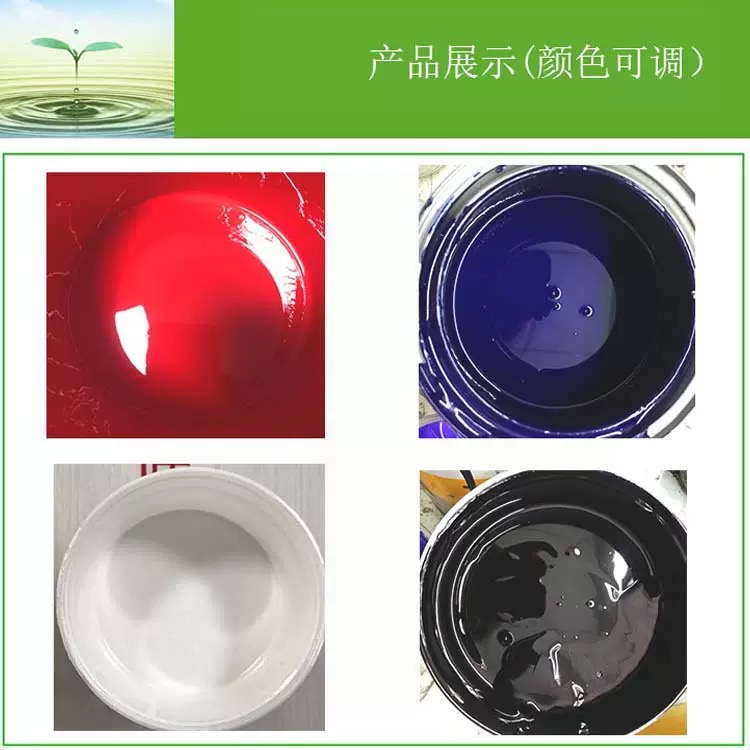
The following table outlines the key technical specifications and operational requirements of Shichuangli High-Temperature Silicone Ink:
| Technical Parameter | Specification Value | Operational Context / Relevance |
|---|---|---|
| Model & Code | High-temperature baking / SCL-00YM | Identifies curing mechanism and product line |
| Fineness & Viscosity | 8 um / 100 S | Determines screen mesh compatibility and print definition |
| Coloring Power | 100 (%) | Ensures vibrant opacity on dark silicone bases |
| Flowing Degree | ≥ 30 (mm) | Controls ink leveling and prevents edge bleeding |
| Shelf Life | 12 Months | Storage stability under standard warehouse conditions |
| Moisture Protection | Reinforced wooden boxes | Packaging standard used during cross-border shipping |
Frequently Asked Questions (FAQ)
Q1: What substrates can this high-temperature silicone ink be printed on?
A1: The ink is designed specifically for silicone rubber substrates, including medical tubes, silicone rubber cables, pen covers, kitchenware handles, baby products, and mechanical buttons.
Q2: What shipping and logistics methods are available for international orders?
A2: We offer diversified cross-border logistics including FBA sea freight, air freight, and land freight. All orders are packed in reinforced wooden boxes, and tracking numbers are synchronized in real-time at every transit stage.
Q3: Does the ink require specific curing equipment?
A3: Yes, as a high-temperature baking silicone ink, it requires thermal curing ovens or tunnel dryers to initiate cross-linking and achieve full adhesion and chemical resistance.
Final Conclusion & Recommendations
For kitchenware applications, printing parameters must be strictly controlled to guarantee full polymerization. This eliminates any potential chemical migration and ensures the printed graphics resist detergent washing. We recommend conducting pre-production sample testing to verify the finished product meets your target food-contact safety standards. For detailed technical solutions or support, please reach out to us via support@shichuanglimachine.com.
About Us
Dongguan Shichuangli Zhihui Technology Co., Ltd., established in 2008, operates a 1,600-square-meter manufacturing and training facility in Dongguan City, China. With a professional team of 150 employees, including 20 R&D design experts, the company specializes in screen printing machines, pad printing machines, hot stamping machines, and supporting printing consumables. Dongguan Shichuangli has served over 15,000 enterprises globally, exporting high-performance equipment and materials to more than 100 countries and regions while maintaining key quality certifications like CNAS and utility model patents.
Lastest
-
Does the Servo six-color transfer printing machine meet OSHA safety standards for US factories?
2026-07-03 -
Are there eco-friendly alternatives to the Servo four-color shuttle transfer printing machine process?
2026-07-03 -
How do you handle defect rate claims for the 3050/5070 Flatbed Screen Printing Machine?
2026-07-03 -
What is the hourly output speed of a 4x6 fully automatic single-color transfer printing machine?
2026-07-03 -
What is the transit risk insurance coverage when buying Screen printing plates under CIF terms?
2026-07-03
SUBSCRIBE
INQUIRY