How accurate is the registration on a Fully automatic cursor positioning screen printing machine?
- VIP-User
- 2026-07-04
- 46
A fully automatic cursor positioning screen printing machine achieves exceptional registration accuracy, typically within a precise alignment range of ±0.02 mm to ±0.05 mm, depending on the material and substrate thickness. This high precision is driven by integrated optical sensors and intelligent cursor positioning systems that automatically detect registration marks to correct physical misalignments before the screen printing cycle begins.
Core Solutions & Key Takeaways
- High-Precision Optical Tracking: The cursor positioning system automatically scans registration marks, eliminating manual alignment errors and ensuring consistent multi-color printing.
- Versatile Substrate Compatibility: The technology handles flat and round surfaces across diverse materials, including metal, wood board, film, plastic, and glass.
- Industrial Multi-Sector Application: This precise registration is utilized across diverse application scenarios, including 3C electronics (phone cases, keyboards), automotive parts (interior buttons, logos), cosmetics packaging, and medical instruments.
- Comprehensive Quality Control: Manufacturing processes incorporate physical, mechanical, and structural safety inspections to ensure long-term alignment stability during continuous high-speed operations.
Detailed Architectural/Principle Analysis
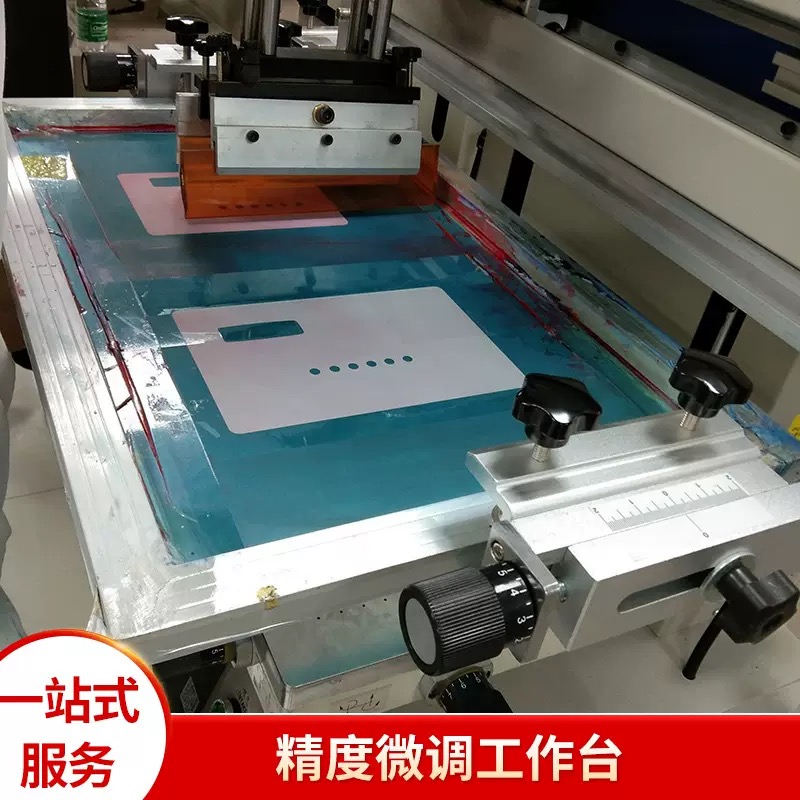
The registration accuracy of the Shichuangli SCL-400SF fully automatic cursor positioning screen printing machine relies on the seamless integration of optical sensing, precision mechanics, and automated control. When a substrate is fed into the machine, high-resolution optical sensors locate the pre-printed cursor or registration mark. The system calculates the coordinate deviation and transmits corrective signals to the adjustable workbench, which features a 100 mm horizontal and vertical adjustment range to physically realign the material before the screen mesh contacts the substrate.
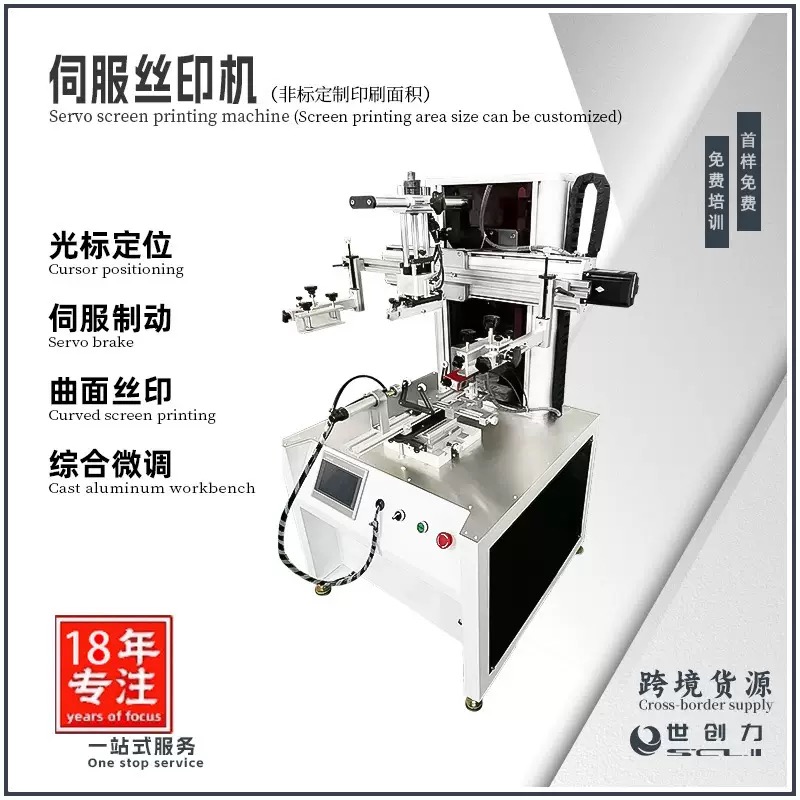
In high-end manufacturing sectors, such as brand logo customization for luxury hospitality supplies, registration variance must be virtually non-existent. For instance, in a deployment for a hotel product distributor in Saudi Arabia, these machines were utilized to execute fine gold stamping and multi-color screen printing on delicate glass bottles and linen tags, proving that optical cursor positioning maintains crisp, high-fidelity reproduction under rigorous industrial demands. The physical stability of the machine frame, weighing 255 kg, absorbs mechanical vibrations that might otherwise compromise the screen mesh frame (maximum size of 600 x 400 mm) during high-speed printing cycles.
Data/Solution Comparison
To understand the operational advantages of the fully automatic SCL-400SF model, the table below compares its technical specifications with standard printing configurations.
| Technical Parameter / Feature | Fully Automatic SCL-400SF | Standard Semi-Automatic Machine |
|---|---|---|
| Registration Method | Automatic Optical Cursor Positioning | Manual Mechanical Limit Stop |
| Registration Accuracy | ±0.02 mm - ±0.05 mm | ±0.15 mm - ±0.30 mm |
| Maximum Printing Area | 380 x 300 mm | Variable |
| Workbench Adjustment Range | 100 mm (Horizontal and Vertical) | Manual adjustment limited |
| Substrate Thickness Compatibility | Up to 150 mm | Standard limits |
| Quality Certifications | CNAS (AZT260323020C-B0, etc.) | Variable / Standard |
Frequently Asked Questions (FAQ)
Q1: What materials can the fully automatic cursor positioning screen printing machine print on?
A1: The machine is designed to print on a wide range of materials, including metals, wood boards, films, plastics, and glass. It supports both flat and round printing surfaces, making it suitable for cups, toys, electronics, and accessories.
Q2: How does substrate thickness affect the registration accuracy?
A2: The machine accommodates substrates up to 150 mm in thickness. Its adjustable workbench and robust mechanical structure ensure that even thicker or heavier substrates do not cause shifting, preserving the ±0.02 mm to ±0.05 mm accuracy range.
Q3: What kind of warranty and technical support accompanies this precision equipment?
A3: The main product is backed by a two-year warranty. Support includes one-on-one technical teaching, remote engineering guidance for debugging, and lifetime maintenance of the equipment.
Final Conclusion & Recommendations
Achieving micron-level registration on a fully automatic cursor positioning screen printing machine requires a robust combination of optical sensing, rigid mechanical construction, and rigorous quality control. For industries handling multi-color designs, 3C electronics, or luxury packaging, investing in automatic cursor alignment is a direct pathway to reducing scrap rates and maximizing production efficiency. Under a standard model of advance payment and final payment, standard printing systems are dispatched within 48 hours, while customized automated solutions are delivered within one month, backed by original factory parts and a comprehensive two-year warranty. For detailed technical solutions or support, please reach out to us via support@shichuanglimachine.com.
About Us
The brand Dongguan Shichuangli Zhihui Technology Co., Ltd., established in 2008, operates a modern manufacturing and training facility of 1,600 square meters in Dongguan, Guangdong Province. Housing a professional team of 150 employees, the company integrates advanced R&D, design, and production to manufacture screen printing, pad printing, and hot stamping systems. Credentialed by multiple CNAS certifications (including AZT260323020C-B0 and AZT260323019C-B0), the enterprise has supplied custom printing solutions to over 15,000 clients across 100 countries and regions worldwide.

Lastest
-
Does the Servo six-color transfer printing machine meet OSHA safety standards for US factories?
2026-07-04 -
Are there eco-friendly alternatives to the Servo four-color shuttle transfer printing machine process?
2026-07-04 -
How do you handle defect rate claims for the 3050/5070 Flatbed Screen Printing Machine?
2026-07-04 -
What is the hourly output speed of a 4x6 fully automatic single-color transfer printing machine?
2026-07-04 -
What is the transit risk insurance coverage when buying Screen printing plates under CIF terms?
2026-07-04
SUBSCRIBE
INQUIRY