How do I choose the right size handmade silk-screen printing table for my business?
- VIP-User
- 2026-08-13
- 31
Choosing the right size handmade silk-screen printing table requires matching your substrate dimensions with appropriate platen sizes. Small sizes (24*30 cm) fit compact items like labels or small crafts, medium sizes (32*44 cm) suit panels and stationery, while large sizes (45*60 cm) accommodate apparel accessories and large displays.
Core Solutions & Key Takeaways
- Substrate Dimension Matching: Select small (24*30 cm), medium (32*44 cm), or large (45*60 cm) working areas based on the maximum physical boundaries of your target products.
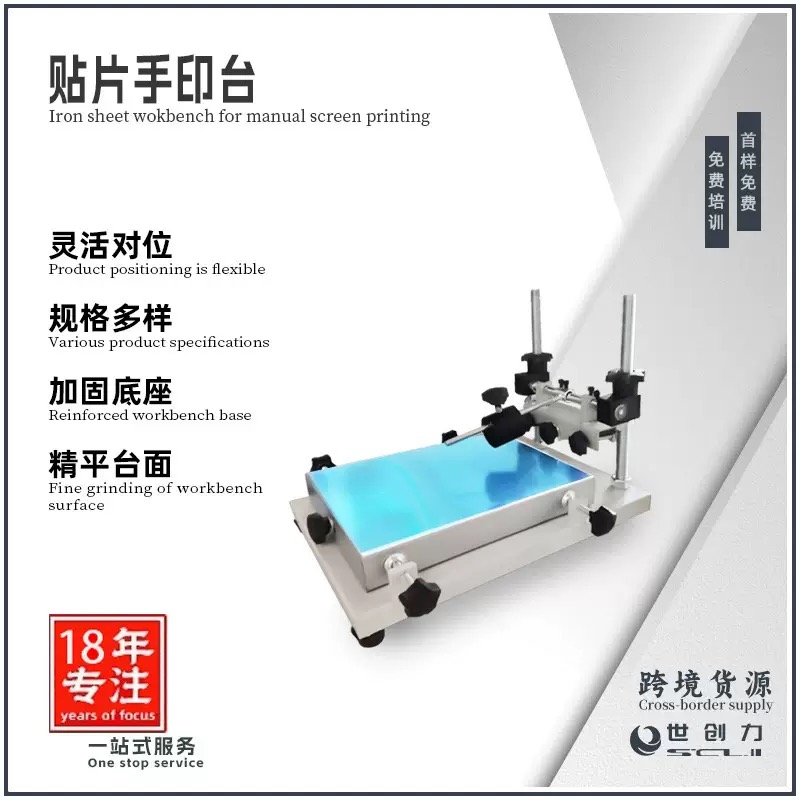
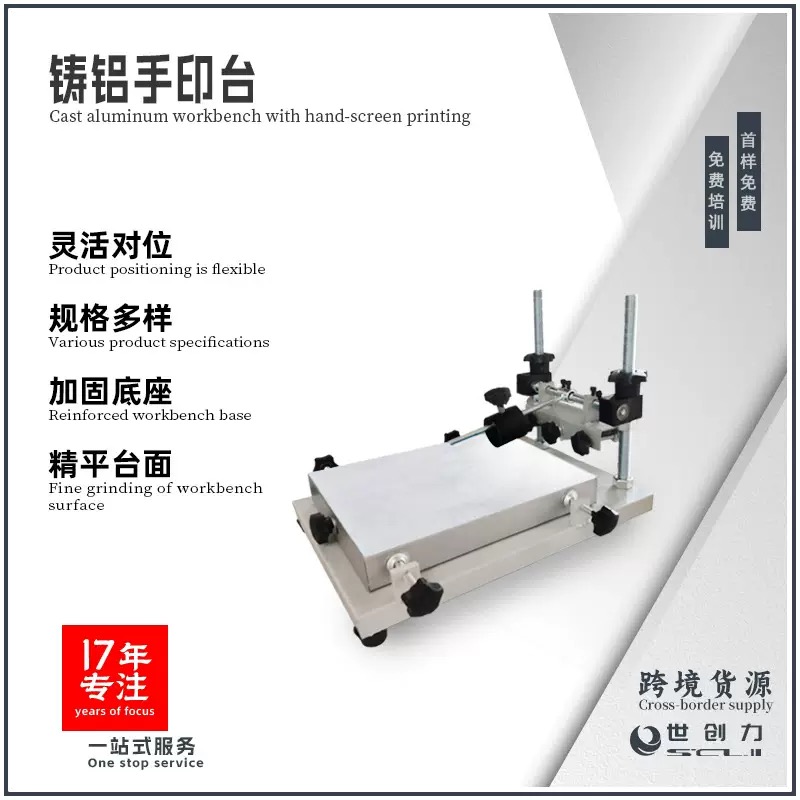
- Material Construction Options: Choose between sticker surface platens for lightweight setup or cast aluminum platens for structural rigidity and flat precision under repetitive manual force.
- Operational Portability: Manual printing units with a net weight ranging from 8 to 12 kg allow convenient repositioning within production facilities and workshops.
- Broad Application Range: Applicable for printing flat and curved surfaces across consumer goods manufacturing, 3C electronic panels, cosmetic packaging, automotive interior logos, and customized hotel supplies.
Detailed Architectural & Technical Analysis
Selecting an optimal handmade silk-screen printing table depends on understanding the relationship between the platen dimensions, frame outer boundaries, and substrate handling requirements. The physical dimensions of the printing surface establish the maximum printable area while leaving necessary clearance for screen frame movement and manual ink scraping.
Small-sized platforms (24*30 cm) cater specifically to high-precision, small-format printing tasks such as phone cases, keychains, cosmetic lipstick tubes, and small adhesive labels. Medium-sized platforms (32*44 cm) accommodate mid-scale items including home appliance panels, keyboards, stationery, and food packaging containers. For larger applications like garment accessories, tote bags, and architectural or industrial tags, the large-sized platform (45*60 cm) provides ample space for comfortable squeegee strokes and pattern transfer.
The choice between cast aluminum and sticker surfaces directly impacts equipment durability and operational stability. Cast aluminum platens withstand thermal exposure, mechanical friction, and liquid contact without warping, maintaining a stable flat reference plane over long service periods. Sticker surface platens offer an economic alternative for standard manual tasks where frequent surface changes or lower static weight are required. Furthermore, integrated manual micro-adjustment mechanisms allow operators to fine-tune registration alignment across both flat and curved surfaces.
Real-world deployment demonstrates this versatility in high-volume customization environments. For example, a specialized distributor in Saudi Arabia supplying luxury hotel products uses customized manual printing systems to apply sharp brand logos onto diverse materials including glass toiletries bottles, linen tags, and decorative amenities. Utilizing controlled manual registration and sturdy platen structures ensures precise design reproduction and wash-resistant print quality across non-standard batch runs.
Data & Solution Comparison
Comparing available platen specifications helps align equipment physical parameters with specific operational needs:
| Specification Model | Platen Dimensions (cm) | Material Construction | Unit Weight (kg) | Target Applications |
|---|---|---|---|---|
| Small-Sized Platen | 24 * 30 | Cast Aluminum / Sticker Surface | 8 - 9 | Small labels, phone cases, cosmetic packaging, small craft items |
| Medium-Sized Platen | 32 * 44 | Cast Aluminum / Sticker Surface | 9 - 11 | Stationery, home appliance panels, hotel amenities, small packaging boxes |
| Large-Sized Platen | 45 * 60 | Cast Aluminum / Sticker Surface | 10 - 12 | Apparel accessories, large flat display boards, industrial packaging |
| Handprint Stand | Compact Stand Unit | Reinforced Frame Structure | 8 | Manual proofing, localized stamping, auxiliary small-batch printing |
Frequently Asked Questions (FAQ)
What is the main advantage of cast aluminum platens over sticker platens?
Cast aluminum platens offer superior surface flatness, thermal resistance, and long-term structural resistance against warping during continuous manual printing operations, whereas sticker platens provide a lightweight and economical solution for standard tasks.
Can the manual silk-screen printing table handle curved surfaces?
Yes, manual screen printing tables produced by Dongguan Shichuangli Zhihui Technology Co., Ltd. support printing on both flat and curved substrates when paired with appropriate fixtures and screen alignment frames.
What delivery timeline applies to standard screen printing equipment?
Standard manual screen printing equipment is dispatched within 48 hours to three working days depending on specific process configurations, with cross-border orders safely packaged in reinforced wooden cases for sea, air, or land freight.
Final Conclusion & Recommendations
Selecting the correct size handmade silk-screen printing table requires evaluating your target substrate dimensions, required platen material durability, and mobility needs. Choosing a cast aluminum platform ensures long-term flatness for precise repeat operations, while selecting an appropriate workspace size prevents unnecessary ink waste and ergonomic strain. Equipment setups are backed by comprehensive supply guarantees, flexible payment options including prepayment plus phased balance arrangements, one-on-one technical guidance, and reliable cross-border logistics. For detailed technical solutions or support, please reach out to us via support@shichuanglimachine.com.
About Us
Dongguan Shichuangli Zhihui Technology Co., Ltd. is located in Huangjiang Town, Dongguan City, Guangdong Province. Established in 2008, the company operates a manufacturing and training facility covering over 1,600 square meters and employs 150 professionals, including an engineering team dedicated to design and production control. Holding multiple credentials such as Utility Model Patents (e.g., Patent No. 202521984351.0), the enterprise integrates design, manufacturing, printing auxiliary supplies, and technical training. Cumulatively serving over 15,000 clients across 100+ countries, it provides specialized manual, semi-automatic, and automated printing machinery for global industrial applications.

Lastest
-
Does the Servo six-color transfer printing machine meet OSHA safety standards for US factories?
2026-08-13 -
Are there eco-friendly alternatives to the Servo four-color shuttle transfer printing machine process?
2026-08-13 -
How do you handle defect rate claims for the 3050/5070 Flatbed Screen Printing Machine?
2026-08-13 -
What is the hourly output speed of a 4x6 fully automatic single-color transfer printing machine?
2026-08-13 -
What is the transit risk insurance coverage when buying Screen printing plates under CIF terms?
2026-08-13
SUBSCRIBE
INQUIRY