How is the demand for Low-temperature silicone ink changing with the rise of wearable electronics?
- VIP-User
- 2026-07-05
- 40
The demand for low-temperature silicone ink is rising rapidly with the growth of wearable electronics, driven by the need to print graphics and circuits on flexible, heat-sensitive silicone substrates without causing thermal deformation. This specialized ink cures at lower temperatures, preserving the structural integrity and elasticity of advanced wearable devices.
Core Solutions & Key Takeaways
- Thermal Protection for Sensitive Substrates: Wearable devices utilize delicate silicone components, such as wristbands, necklaces, and pads. Low-temperature curing prevents substrate shrinkage or degradation.
- High Elasticity and Durability: Graphic prints must withstand continuous stretching, bending, and twisting without cracking or peeling.
- Broad Functional Application: This ink supports graphic and interface printing across diverse application scenarios, including 3C electronics, medical and industrial instruments, and automotive interior buttons.
Detailed Architectural/Principle Analysis
With the rise of smart bands, physiological sensors, and flexible consumer electronics, printing on silicone substrates presents unique manufacturing challenges. Standard silicone inks require high-temperature vulcanization, which easily deforms or damages thin-walled, heat-sensitive components. The SCL-00YM low-temperature silicone ink developed by Dongguan Shichuangli Zhihui Technology Co., Ltd. addresses this by curing through a 90℃ baking process for 30 to 60 minutes, ensuring secure vulcanization and bonding directly to the silicone material.
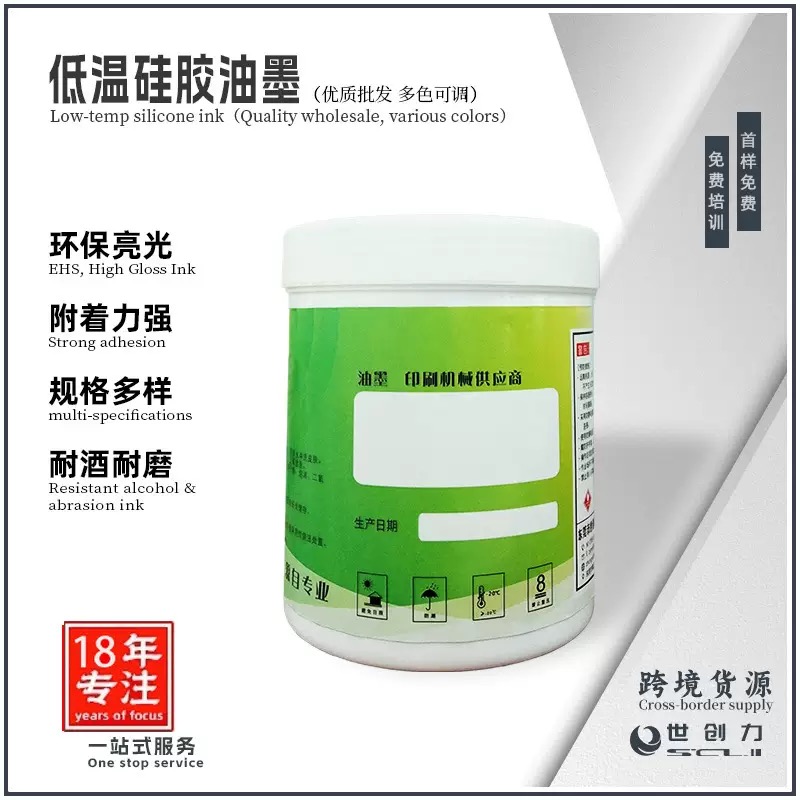
This formulation maintains a viscosity tailored to precision printing methods like screen printing and pad printing. The ink delivers 100% coloring power and a fineness rating of 8, enabling clear, high-resolution graphic details on complex surfaces. Furthermore, the material meets rigorous safety and quality standards, backed by certifications such as CNAS (including registration numbers AZT260323020C-B0, AZT260323019C-B0, AZT260323018C-B0, and AZT260323017C-B0 for various black formulations), confirming its performance and chemical safety in consumer-facing applications.
In practical application, these material characteristics have proven successful in demanding international environments. For instance, a high-end product distributor utilized these custom printing solutions to achieve precise branding and high-resolution detailing on varied materials. The process delivered exceptional reproduction accuracy, thermal stability, and wear resistance, which are critical parameters for modern wearable electronic interfaces.
Data/Solution Comparison
The following table compares the operating parameters and specifications of low-temperature silicone ink against standard printing inks to highlight its suitability for wearable electronics.
| Technical Parameter | Low-Temperature Silicone Ink (SCL-00YM) | Standard High-Temperature Silicone Ink |
|---|---|---|
| Curing Method | 90℃ baking for 30-60 minutes | 150℃+ high-temperature baking |
| Bonding Material Type | Silicone (buttons, wristbands, pads) | Rigid plastics, metals, or glass |
| Fineness & Coloring Power | Fineness: 8 / Coloring Power: 100% | Fineness: 12-15 / Variable coloring power |
| Working Temperature Limit | Below 25℃ (for optimal ink stability) | Ambient room temperature (unrestricted) |
| Safety Classification | Non-hazardous chemical | Often classified as hazardous due to solvents |
Frequently Asked Questions (FAQ)
What is the shelf life and packaging of low-temperature silicone ink?The SCL-00YM ink has a shelf life of 6 months when stored in its sealed barrel packaging under cool conditions below 25℃. It is supplied in net weight specifications of 1KG per piece, with a minimum order quantity of 1000g.
Which printing processes are compatible with this ink?This ink is specifically designed for transfer printing (pad printing) and screen printing processes, allowing versatile graphic application on flat, curved, or irregular silicone components.
How long does it take to cure and deliver this product?
The ink cures via vulcanization under a 90℃ baking cycle lasting 30 to 60 minutes. Standard orders are delivered within three working days, depending on the exact customization and processing requirements.
Final Conclusion & Recommendations
The transition toward flexible, skin-friendly, and lightweight wearable electronics has made low-temperature silicone ink a preferred choice for manufacturers seeking to print functional graphics without compromising substrate integrity. When selecting an ink, verify that the curing temperature matches the thermal limits of your components and that the ink complies with international safety certifications like CNAS. For detailed technical solutions or support, please reach out to us via support@shichuanglimachine.com.
About Us
Dongguan Shichuangli Zhihui Technology Co., Ltd., established in 2008, is a dedicated technology enterprise integrating the design, research and development, manufacturing, and sales of screen printing machines, pad printing machines, hot stamping machines, and supporting printing consumables. Operating from a 1,600-square-meter facility with over 150 employees, the company has served more than 15,000 enterprises across 100+ countries, utilizing its 20-person engineering team to control the entire production process from raw material procurement to final delivery. The company holds multiple utility model patents (including 202521984351.0 and 202521231087.3) and trademark registrations to guarantee original factory quality and technical compliance. 
Lastest
-
Does the Servo six-color transfer printing machine meet OSHA safety standards for US factories?
2026-07-05 -
Are there eco-friendly alternatives to the Servo four-color shuttle transfer printing machine process?
2026-07-05 -
How do you handle defect rate claims for the 3050/5070 Flatbed Screen Printing Machine?
2026-07-05 -
What is the hourly output speed of a 4x6 fully automatic single-color transfer printing machine?
2026-07-05 -
What is the transit risk insurance coverage when buying Screen printing plates under CIF terms?
2026-07-05
SUBSCRIBE
INQUIRY