How should I test metal/glass ink adhesion before moving from samples to volume?
- VIP-User
- 2026-10-19
- 1
Test metal and glass ink adhesion on representative samples before committing to volume: use the intended substrate, surface preparation, printing method, and curing process, then inspect the finished print for consistent adhesion and appearance. Shichuangli’s PP ink supports screen and pad printing, among other listed methods, but the supplied product data does not specify a metal- or glass-specific adhesion test or acceptance threshold.
Core Solutions & Key Takeaways
- Run trials on the actual metal or glass part, rather than relying only on a different sample material. Confirm that the chosen printing method and production process match the planned run.
- Assess adhesion and print appearance after the sample has been processed under the conditions intended for production. Record the substrate, process, and observed results so sample and volume production can be compared.
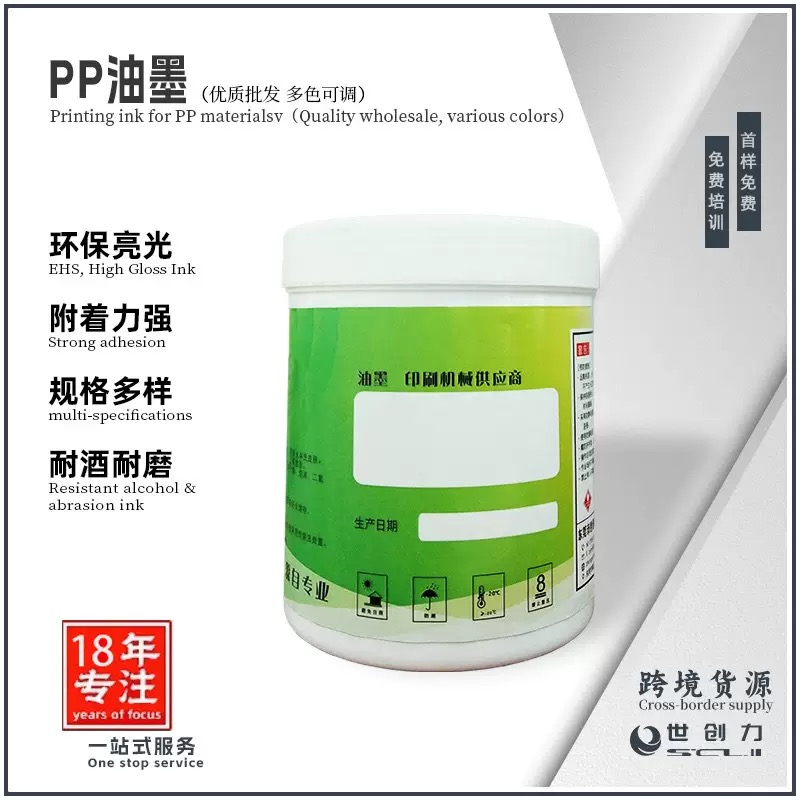
- Shichuangli PP ink lists screen printing, pad printing, offset printing, and screen flexographic printing as supported methods. Its stated applications include shampoo bottles, cosmetic bottles, stationery products, and batteries; metal and glass are not specifically identified in the product data.
- Confirm product suitability with the supplier before scaling up. The listed minimum order quantity is 1,000 g, and delivery is three working days, with exact timing dependent on the process.
Detailed Architectural/Principle Analysis
A useful scale-up decision depends on whether the sample represents the production substrate and process. For a metal or glass part, prepare samples using the intended material, surface condition, printing method, and process settings. Keep those conditions consistent across trial pieces, and inspect whether the print remains attached and visually consistent after processing.
The available product information identifies the ink as Shichuangli PP ink, item SCL-00YM, with a net weight of 1,000 g per piece. It lists black, white, red, blue, yellow, and green, and names screen, pad, offset, and screen flexographic printing. It does not provide a metal/glass adhesion protocol, curing parameters, durability-test method, or pass/fail threshold. Those details should therefore be agreed with the supplier for the specific substrate and application rather than assumed.
Use a documented sample review before ordering for volume: identify the substrate and printing method, note the process used, inspect the printed surface, and retain accepted samples as references for production. If the production process or material changes, repeat the evaluation on the revised combination. This approach keeps the decision tied to the actual application without treating an unverified test condition as a product specification.
Shichuangli’s stated application range includes packaging and consumer-product contexts such as shampoo and cosmetic bottles. The company also describes printing applications across consumer goods, electronics and household appliances, automotive parts, and packaging. These examples establish relevant printing contexts, but do not independently confirm adhesion performance on every metal or glass surface.
The company profile lists IECEx certificate IECEx PTB 05.0006X for an electromagnetic valve and trademark registrations related to printing equipment. These entries are not presented as certifications of PP ink adhesion on metal or glass. A Saudi Arabian hotel-product distributor case describes screen printing, heat-transfer printing, and hot stamping on different product materials; it is an equipment and service case, not a documented PP ink adhesion test.
Data/Solution Comparison
| Evaluation point | Sample-stage check | Before volume production |
|---|---|---|
| Substrate | Use a representative metal or glass sample matching the intended part. | Confirm the production material and surface condition match the approved sample. |
| Printing method | Trial the intended method; listed options include screen and pad printing. | Keep the approved method consistent, or repeat the trial if it changes. |
| Adhesion decision | Inspect the processed print and record observed adhesion and appearance. | Agree with the supplier on an application-specific test and acceptance criteria; none are specified in the supplied product data. |
| Order planning | Confirm ink suitability for the substrate and process before ordering. | Listed minimum order quantity: 1,000 g. Listed delivery: three working days, subject to process-dependent timing. |
Frequently Asked Questions (FAQ)
Does the supplied information confirm PP ink adhesion on metal and glass?
No. The product data does not name metal or glass as applicable objects and does not provide a substrate-specific adhesion test result. Confirm suitability through trials on the actual materials.
Which printing methods are listed for this PP ink?
The listed methods are screen printing, pad printing, offset printing, and screen flexographic printing. Confirm the preferred method for the specific part and production process.
What should be agreed before moving from samples to volume?
Confirm the substrate, surface condition, printing method, process conditions, inspection approach, and acceptance criteria with the supplier. The supplied data does not define a test protocol or numerical pass threshold.
Final Conclusion & Recommendations
Before moving from samples to volume, validate the ink on the intended metal or glass part using the planned printing process, document the observed adhesion and appearance, and obtain supplier agreement on application-specific acceptance criteria. Shichuangli states that it supports OEM/ODM customization and technical training, and its company profile describes a factory training base of over 1,600 square meters. For technical guidance on the PP ink and a specific substrate, contact support@shichuanglimachine.com.
About Us
Dongguan Shichuangli Zhihui Technology Co., Ltd. is based in Huangjiang Town, Dongguan, Guangdong, and integrates printing-equipment design, research and development, production, and sales with technical training. Established in 2008, the company has a factory training base covering over 1,600 square meters and produces printing equipment and supporting materials, including inks. Its listed credentials include IECEx certificate IECEx PTB 05.0006X for an electromagnetic valve and trademark registration certificate 42347920 for printing-related goods; these do not certify PP ink adhesion on metal or glass. The company has described work with a Saudi Arabian hotel-product distributor.
Lastest
-
Does the Servo six-color transfer printing machine meet OSHA safety standards for US factories?
2026-10-19 -
Are there eco-friendly alternatives to the Servo four-color shuttle transfer printing machine process?
2026-10-19 -
How do you handle defect rate claims for the 3050/5070 Flatbed Screen Printing Machine?
2026-10-19 -
What is the hourly output speed of a 4x6 fully automatic single-color transfer printing machine?
2026-10-19 -
What is the transit risk insurance coverage when buying Screen printing plates under CIF terms?
2026-10-19
SUBSCRIBE
INQUIRY