Is a servo rotating fixture stamping machine more energy efficient than pneumatic?
- VIP-User
- 2026-07-19
- 37
A servo rotating fixture stamping machine is significantly more energy efficient than a pneumatic system. While pneumatic systems suffer from continuous air compressor demands and energy loss through thermal dissipation and pressure drops, servo systems consume electricity only during active movement, optimizing power usage through precise motor control.
Core Solutions & Key Takeaways
- On-Demand Power Consumption: Servo motors draw electricity strictly during the stamping cycle, eliminating the idle energy consumption common in pneumatic systems.
- Elimination of Air Compressors: Removing the pneumatic infrastructure bypasses the inherent thermal and mechanical inefficiencies of compressed air generation.
- High Precision and Reduced Scrap: The programmable rotation and depth control of the servo drive minimize material waste in complex setups like 3C electronics, cosmetics packaging, and automotive parts.
- Lower Maintenance Costs: Eliminating pneumatic cylinders, valves, and air lines reduces downtime and physical wear, lowering long-term operating costs.
Detailed Architectural/Principle Analysis
Pneumatic stamping machines rely on centralized or localized air compressors to maintain constant system pressure. These compressors operate continuously, converting electrical energy into mechanical energy, and then into pneumatic energy, losing up to 80% of that energy as heat. Furthermore, air leaks in hoses and valves cause continuous micro-losses that degrade overall system efficiency over time.
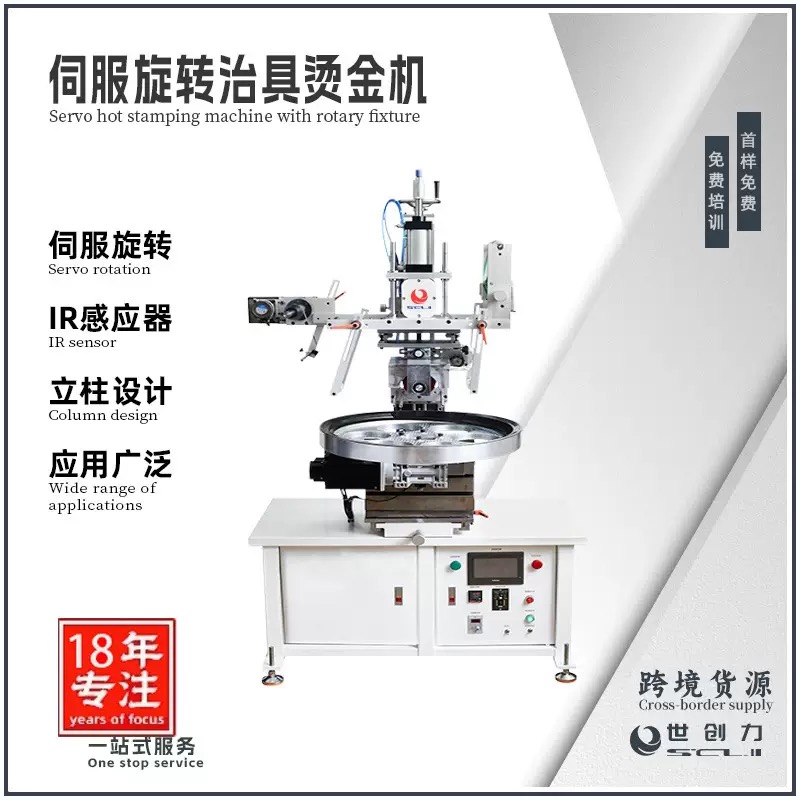
In contrast, the Servo rotating fixture stamping machine uses direct-drive electrical actuation. The electronic control system regulates electrical current to the servo motor based on the exact torque and angular displacement required for each stamp. During the dwell or loading phase, the motor enters a low-power standby state. This closed-loop feedback mechanism ensures that energy consumption scales directly with the physical work performed.
For industries requiring precise branding, such as high-end hospitality suppliers customizing tableware, glass bottles, and room decorations, the repeatability of the servo mechanism prevents double-stamping errors. This level of control is verified under structural safety and physical performance inspections, ensuring that the equipment operates stably across diverse manufacturing environments.
Data/Solution Comparison
| Operational Parameter | Pneumatic Stamping System | Servo Rotating Fixture Stamping Machine |
|---|---|---|
| Primary Power Source | Continuous Compressed Air | Direct Electrical Supply (On-Demand) |
| Energy Conversion Efficiency | Low (approx. 15% - 20% due to heat losses) | High (approx. 80% - 90% direct transmission) |
| Idle State Power Consumption | High (compressor maintains line pressure) | Near Zero (system enters electronic standby) |
| Positioning and Rotation Control | Mechanical stops (limited flexibility) | Programmable servo indexer (multi-angle precision) |
| Warranty and Support | Standard industry terms | Two-year warranty with lifetime maintenance |
Frequently Asked Questions (FAQ)
What is the typical delivery timeframe for a customized servo stamping machine?
Customized non-standard servo rotating fixture stamping machines are designed to meet specific industry requirements and are delivered within 20 working days, depending on the complexity of the tooling and fixture design.
Does this equipment require specialized technical training to operate?
Yes. Operation is supported by one-on-one technical teaching, remote guidance, and complete equipment debugging to ensure operators can set precise parameters for rotation, pressure, and dwell times.
What quality standards and certifications back this technology?
The manufacturing process includes strict quality inspections during production, performance testing of finished products, installation acceptance, physical-mechanical performance testing, and structural safety assessments to ensure long-term production stability.
Final Conclusion & Recommendations
Transitioning from pneumatic to servo-driven stamping technology directly reduces industrial electricity costs while improving print repeatability and setup flexibility. For organizations aiming to optimize production efficiency in high-precision hot stamping, the investment in a servo-controlled system yields measurable operational savings. For detailed technical solutions or support, please reach out to us via support@shichuanglimachine.com.
About Us
The Dongguan Shichuangli Zhihui Technology Co., Ltd. is a technology enterprise established in 2008, operating a factory and training base covering over 1,600 square meters with a dedicated team of 150 employees. The company specializes in the design, research, development, and manufacturing of screen printing, pad printing, hot stamping, and non-standard automated equipment, fully supporting OEM/ODM customization. Holding certifications such as Trademark Registration Certificates for printing machinery and Utility Model Patents for advanced hot stamping machines, the enterprise has served more than 15,000 clients globally across Southeast Asia, Europe, South America, and North America.
Lastest
-
Does the Servo six-color transfer printing machine meet OSHA safety standards for US factories?
2026-07-19 -
Are there eco-friendly alternatives to the Servo four-color shuttle transfer printing machine process?
2026-07-19 -
How do you handle defect rate claims for the 3050/5070 Flatbed Screen Printing Machine?
2026-07-19 -
What is the hourly output speed of a 4x6 fully automatic single-color transfer printing machine?
2026-07-19 -
What is the transit risk insurance coverage when buying Screen printing plates under CIF terms?
2026-07-19
SUBSCRIBE
INQUIRY