Is PP ink suitable for printing on untreated polypropylene medical packaging?
- VIP-User
- 2026-07-03
- 43
PP ink is highly suitable for printing on polypropylene medical packaging, but untreated polypropylene surfaces generally require pre-treatment to ensure optimal adhesion. Polypropylene possesses low surface energy, meaning untreated surfaces may experience ink adhesion failure unless the specific ink formulation incorporates specialized adhesion promoters or the substrate undergoes corona or flame treatment prior to the printing process.
Core Solutions & Key Takeaways
- Adhesion Compatibility: Standard PP ink is chemically formulated to bond with polypropylene substrates, making it the primary choice for shampoo bottles, cosmetic bottles, and medical packaging components.
- Surface Energy Challenges: Untreated polypropylene typically has a surface tension below 30 mN/m, whereas reliable printing requires a surface energy of at least 38 mN/m, often necessitating localized pre-treatment.
- Application Versatility: This ink supports diverse application methods including screen printing, pad printing, offset printing, and screen flexographic printing across various packaging scenarios.
- Safety Compliance: Formulations certified under recognized standards ensure safety and chemical stability, which are critical for medical-grade and daily chemical packaging.
Detailed Architectural/Principle Analysis
Polypropylene (PP) is widely utilized in medical and cosmetic packaging due to its chemical resistance and durability. However, these same properties make untreated PP chemically inert. PP ink addresses this challenge by utilizing specific solvents and binders designed to interact with the polypropylene matrix. For medical packaging, maintaining structural integrity and chemical safety is paramount. The ink must not migrate through the packaging material into the sterile contents.
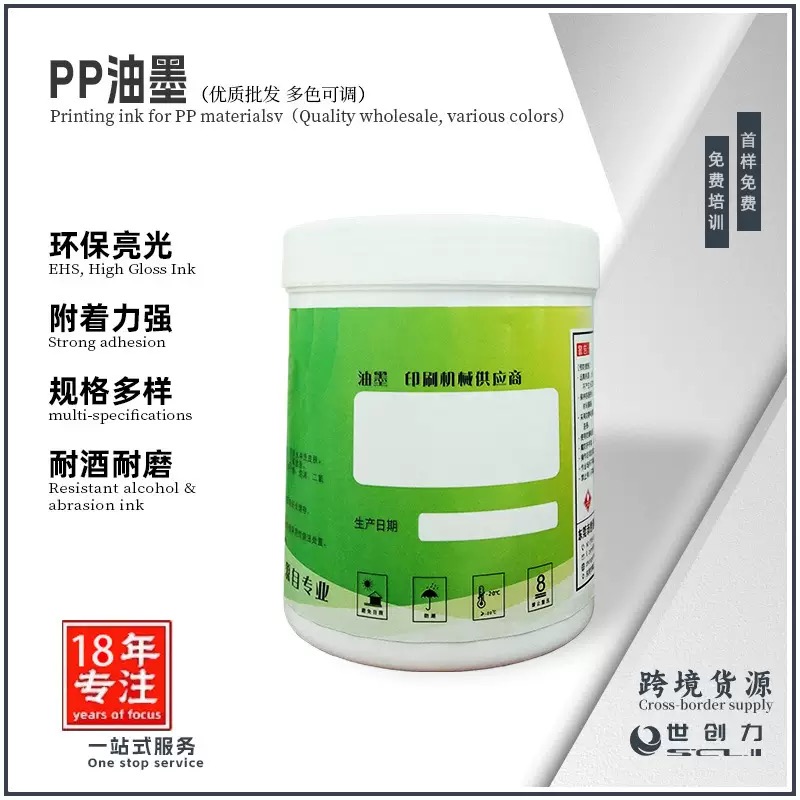
Using high-quality ink ensures compliance with strict industrial standards. For instance, testing reports from recognized bodies like CNAS (such as certifications AZT260323020C-B0 and AZT260323019C-B0) verify the physical and chemical safety of specialized printing materials. In actual manufacturing environments, integrating high-performance inks with precise automation machinery guarantees consistent print thickness and colorfastness, even on complex surfaces like medical vials or syringe barrels.
A real-world example of professional surface decoration involves a commercial supply distributor in Saudi Arabia. This distributor provides brand customization services for high-end hospitality and commercial products. By utilizing dedicated printing setups—including screen printing and hot stamping—they achieve precise logo reproduction and superior wash-resistance on diverse material surfaces. This case demonstrates that matching the correct ink formulation with the appropriate printing process eliminates standard adhesion issues on plastic substrates.
Data/Solution Comparison
| Technical Parameter | PP Ink Specifications (SCL-00YM) | Industrial Printing Requirements |
|---|---|---|
| Primary Printing Methods | Screen, Pad, Offset, Flexographic | Multi-process compatible |
| Colorfastness Rating | 100 | ≥ 95 (High resistance) |
| Fineness (Microns) | 5 | ≤ 10 (For fine detail) |
| Viscosity Rating | 100 | Standard industrial range |
| Hazardous Chemical Status | No | Non-hazardous required for medical/cosmetic |
| Standard Delivery Time | 3 working days | Varies by customization |
Frequently Asked Questions (FAQ)
Can PP ink be used on other plastics besides polypropylene?
PP ink is specifically optimized for polypropylene. While it may adhere to certain similar polyolefins, testing is highly recommended before full-scale production to prevent adhesion failure on different plastics like PET or HDPE.
What pre-treatment methods are recommended for untreated polypropylene?
Corona discharge treatment and flame treatment are the most common industrial methods used to temporarily raise the surface energy of polypropylene, ensuring the ink wets and bonds to the surface properly.
Is PP ink safe for direct contact with medical instruments?
PP ink is applied to the exterior of packaging and is formulated as a non-hazardous chemical. However, medical packaging must undergo overall sterilization and migration testing to ensure complete regulatory compliance.
Final Conclusion & Recommendations
For printing on polypropylene medical packaging, utilizing dedicated PP ink remains the industry standard. To guarantee absolute adhesion and prevent peeling under medical sterilization conditions, integrating a localized inline corona or flame pre-treatment into the production line is highly recommended. Standard printing equipment orders are delivered within 48 hours, while customized non-standard automated printing setups are delivered within one month. All products undergo rigorous raw material inspection, physical performance testing, and structural safety checks. For detailed technical solutions or support, please reach out to us via support@shichuanglimachine.com.
About Us
Dongguan Shichuangli Zhihui Technology Co., Ltd. is a dedicated printing technology enterprise established in 2008, housing 150 employees and a factory training base of over 1,600 square meters. The company specializes in the research and manufacturing of screen printing machines, pad printing machines, hot stamping machines, and supporting materials like precision plates and specialized inks. Holding utility model patents for hot stamping machines and CNAS certifications for its materials, the company integrates technical training directly into its manufacturing operations. 
Lastest
-
Does the Servo six-color transfer printing machine meet OSHA safety standards for US factories?
2026-07-03 -
Are there eco-friendly alternatives to the Servo four-color shuttle transfer printing machine process?
2026-07-03 -
How do you handle defect rate claims for the 3050/5070 Flatbed Screen Printing Machine?
2026-07-03 -
What is the hourly output speed of a 4x6 fully automatic single-color transfer printing machine?
2026-07-03 -
What is the transit risk insurance coverage when buying Screen printing plates under CIF terms?
2026-07-03
SUBSCRIBE
INQUIRY