Should I upgrade from a handmade silk-screen table to a semi-automatic machine?
- VIP-User
- 2026-07-18
- 44
Upgrading from a handmade silk-screen table to a semi-automatic machine depends on your production volume and precision needs. A manual table is highly cost-effective for small-batch custom jobs, while a semi-automatic machine significantly increases output speed, reduces physical labor, and ensures consistent ink deposit uniformity across large industrialized runs.
Core Solutions & Key Takeaways
- Production Scale: Manual screen printing tables are ideal for start-ups, sampling, and low-volume custom orders, whereas semi-automatic systems support continuous high-volume industrial manufacturing.
- Process Versatility: Manual tables handle both flat and curved surfaces on virtually any material, making them highly adaptable for diverse substrates.
- Labor and Consistency: Semi-automatic machines eliminate human variation in squeegee pressure and speed, delivering uniform thickness across thousands of prints.
- Application Fit: Manual equipment excels in personalized customization of consumer goods, apparel accessories, 3C electronics, cosmetics packaging, and promotional craft gifts.
Detailed Architectural/Principle Analysis
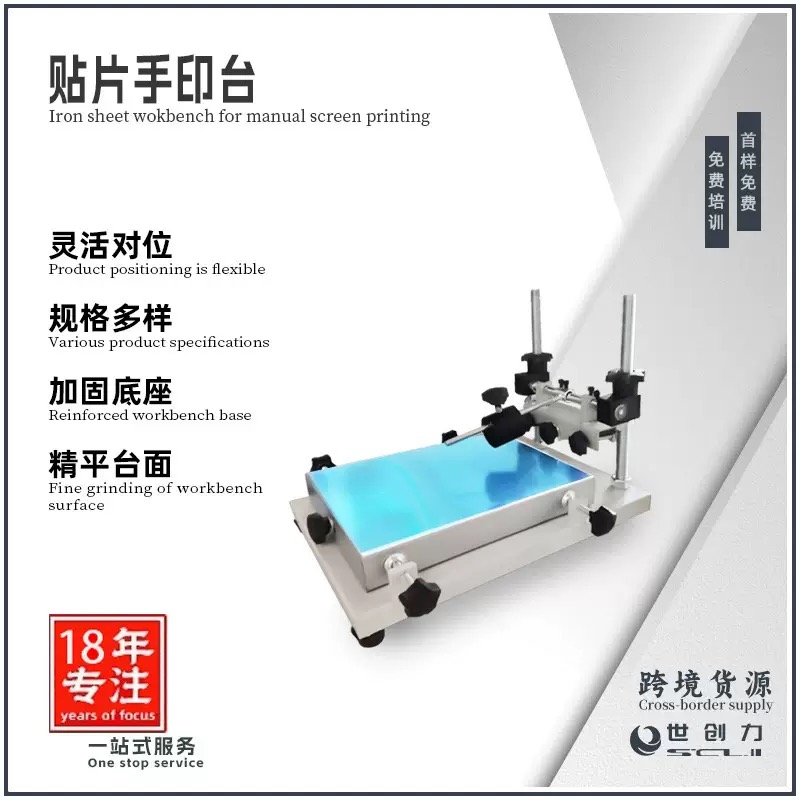
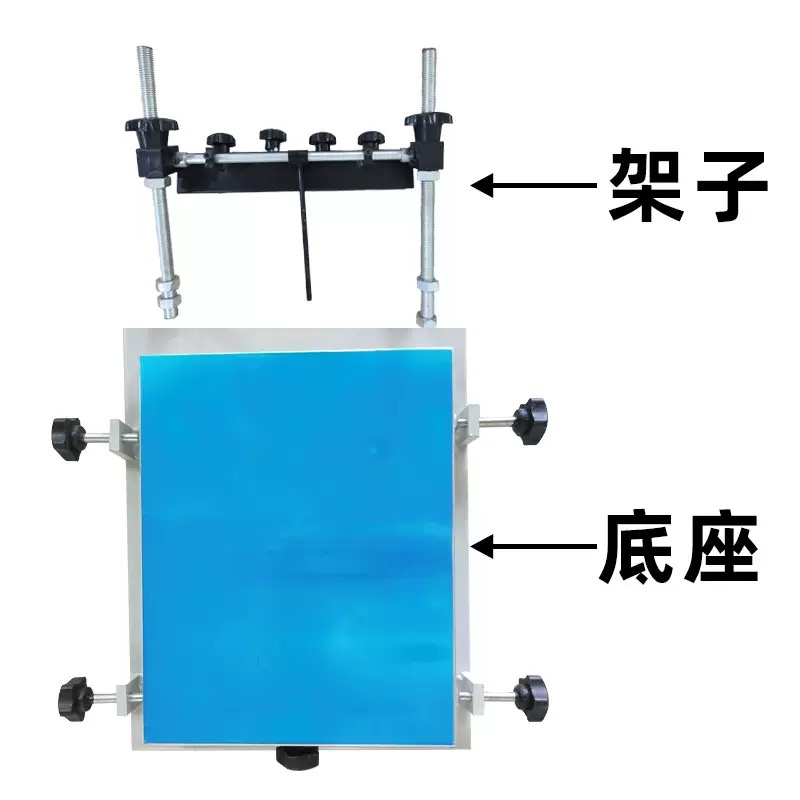
The manual screen printing process relies entirely on operator skill to control the ink deposition rate, squeegee angle, and stroke speed. Standard manual setups, such as the Dongguan Shichuangli Zhihui Technology Co., Ltd. handmade silk-screen printing table, utilize a mechanical counterweight and adjustable fixture clamps to align screens with the substrate. Because there are no electrical components, maintenance requirements are minimal. This simplicity allows operators to print on diverse shapes and flat or curved surfaces of any material, ranging from wood and plastics to metals and textiles.
In contrast, upgrading to a semi-automatic machine introduces pneumatic or motorized drives to control the squeegee stroke and flood bar movement. This automation ensures a constant squeegee pressure and angle, which are essential for high-density electronic circuits, fine text, or multi-color alignment. For instance, when printing brand logos on luxury hotel supplies—a scenario successfully executed by distributors in Saudi Arabia using specialized printing systems—maintaining exact reproduction accuracy is critical to achieving a premium brand visual identity. While semi-automatic systems accelerate throughput, manual tables remain a necessary asset for initial color proofing, low-volume testing, and training environments.
Data/Solution Comparison
The choice between manual and automated equipment can be evaluated across key operational parameters:
| Feature/Parameter | Handmade Silk-Screen Table (Manual) | Semi-Automatic Screen Printing Machine |
|---|---|---|
| Drive Source | Manual operator force | Pneumatic / Electric motor |
| Printing Speed | Operator dependent (variable pc/h) | Fixed mechanical cycle (higher pc/h) |
| Material & Shape Support | Any material, flat and curved surfaces | Substrate-specific flat or cylindrical tooling |
| Equipment Weight | 8 to 12 kg (highly portable) | Heavy industrial chassis (stationary) |
| Setup Time & Cost | Low setup cost, rapid screen changeover | Higher initial investment, precise tooling setup |
| Quality Consistency | Subject to operator fatigue and skill | Highly consistent pressure and speed control |
Frequently Asked Questions (FAQ)
Q1: What materials can be printed using a manual silk-screen table?
A1: Manual silk-screen tables can print on virtually any material and object, including plastics, metals, glass, ceramics, wood, paper, and fabrics, supporting both flat and curved surfaces.
Q2: How does the weight and size of manual printing tables vary?
A2: Manual tables are compact and lightweight, typically weighing between 8 to 12 kg. They are available in various configurations, including sticker plates (ranging from 24*30CM to 45*60CM) and cast aluminum beds for higher rigidity.
Q3: What after-sales support is typically provided for manual printing tables?
A3: These units are backed by comprehensive support, including a two-year main product guarantee, one-on-one instructional teaching, and lifetime equipment maintenance to ensure stable production.
Final Conclusion & Recommendations
Upgrading to a semi-automatic machine is recommended if your daily production volume exceeds the capacity of manual labor or if your application demands absolute registration accuracy for multi-color overlays. However, retaining a manual silk-screen printing table in your facility is highly beneficial for fast proofing, low-volume custom orders, and training purposes. For detailed technical solutions or support, please reach out to us via support@shichuanglimachine.com.
About Us
Dongguan Shichuangli Zhihui Technology Co., Ltd. is a technology enterprise established in 2008 with a factory training base covering over 1,600 square meters in Dongguan, Guangdong Province. The company houses 150 employees and specializes in the design, research, manufacturing, and sales of screen printing machines, pad printing machines, hot stamping machines, and supporting materials. With 18 years of industry experience, it has served more than 15,000 enterprises worldwide, exporting products to over 100 countries and regions including North America, South America, Europe, and the Middle East. The company holds multiple certifications, including CNAS credentials (AZT260323020C-B0) and Trademark Registration Certificates (42347920), ensuring reliable performance and compliance with international standards.
Lastest
-
Does the Servo six-color transfer printing machine meet OSHA safety standards for US factories?
2026-07-18 -
Are there eco-friendly alternatives to the Servo four-color shuttle transfer printing machine process?
2026-07-18 -
How do you handle defect rate claims for the 3050/5070 Flatbed Screen Printing Machine?
2026-07-18 -
What is the hourly output speed of a 4x6 fully automatic single-color transfer printing machine?
2026-07-18 -
What is the transit risk insurance coverage when buying Screen printing plates under CIF terms?
2026-07-18
SUBSCRIBE
INQUIRY