What are the latest automation trends in Servo six-color transfer printing machines for smart factories?
- VIP-User
- 2026-07-04
- 34
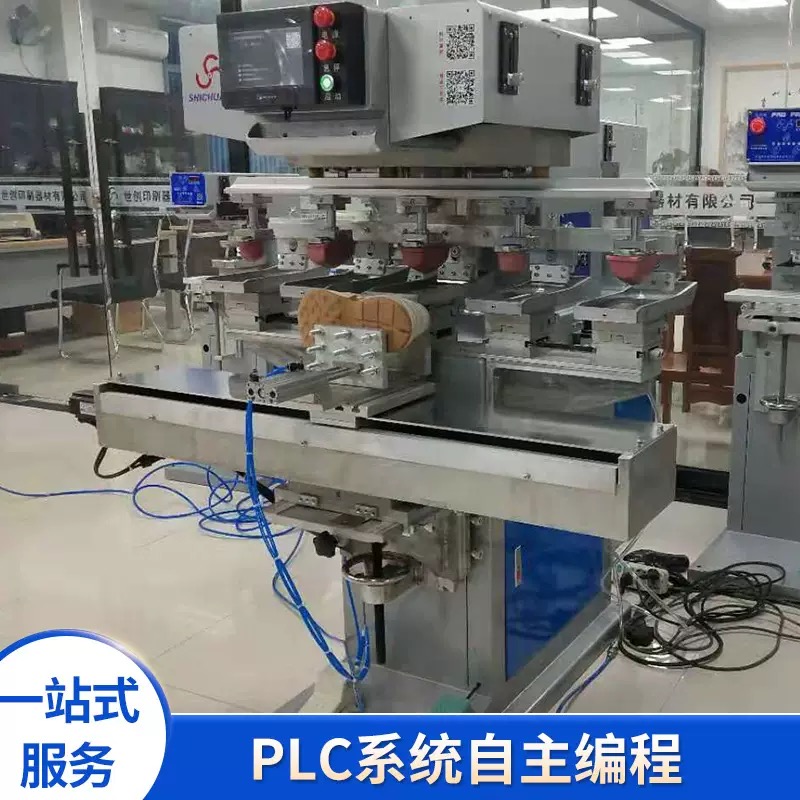
Servo six-color transfer printing machines drive smart factory automation through programmable logic controllers (PLCs), high-precision servo-driven shuttle tables, and closed-loop feedback systems. These technologies enable precise multi-color registration, rapid electronic adjustments for diverse product changeovers, and seamless integration with industrial IoT networks for real-time monitoring and automated production workflows.
Core Solutions & Key Takeaways
- Full Servo Axis Synchronization: Precise servo motors control both the pad stroke and the shuttle table, eliminating mechanical variance and guaranteeing high-precision alignment across six colors.
- Flexible Smart Factory Integration: Compatible with automated loading/unloading robotic arms and conveyor systems to facilitate continuous, unmanned production lines.
- Broad Material and Product Adaptation: Optimizes printing workflows across diverse sectors, including automotive parts (interior buttons, logos), 3C electronics (phone cases, keyboards), cosmetics packaging, and medical instruments.
- Reduced Setup Times: Digital recipe storage on the HMI enables operators to switch printing profiles instantly, minimizing downtime during high-mix, low-volume production runs.
Detailed Architectural/Principle Analysis
Modern smart manufacturing relies on the elimination of manual adjustments to achieve zero-defect manufacturing. The SCL-SF/6S Servo six-color transfer printing machine engineered by Dongguan Shichuangli Zhihui Technology Co., Ltd. replaces traditional pneumatic linkages with independent servo drives. This architectural shift allows operators to adjust the stroke, speed, and position of each color station independently via a digital interface, maintaining highly consistent print quality even over long production cycles.
In high-throughput environments, structural safety and raw material quality are certified under strict international frameworks. Supporting materials and machinery components comply with standards such as CNAS (including certified formulations like SCOO6-501 and SCRS-501 Black) and trademark/utility model patents (such as Patent No. 202521231087.3 for fully automatic bronzing systems). This compliance ensures physical reliability and structural integrity under continuous, high-speed operation.
Real-world implementation of these automated systems is demonstrated by a high-end distributor in Saudi Arabia utilizing 20 specialized printing units. By employing precise servo transfer systems, the distributor achieves high-precision gold stamping and wash-resistant transfer printing on varied hotel supply materials, including glass, linen, and tableware, validating the system's repeatability and industrial-grade stability.
Data/Solution Comparison
| System Parameter / Feature | Standard Pneumatic Transfer Printer | SCL-SF/6S Servo Six-Color Printer |
|---|---|---|
| Control Mechanism | Pneumatic cylinders with manual stops | Multi-axis closed-loop servo control |
| Color Registration Precision | ±0.15 mm (subject to pressure wear) | ±0.02 mm (digitally corrected) |
| Maximum Printing Area | Variable by model | 120 mm x 70 mm |
| Setup & Changeover Time | 30–60 minutes (mechanical alignment) | Under 5 minutes (via saved digital recipes) |
| Smart Factory Compatibility | Low (isolated operation) | High (PLC integration, digital I/O for robots) |
Frequently Asked Questions (FAQ)
Q1: How does the SCL-SF/6S accommodate different product heights and materials in a smart factory line?
A1: The machine supports a printing material thickness range of up to 200 mm. Height adjustments are managed via the servo system, allowing automatic positioning adjustments to suit diverse substrates like plastics, metals, wood, and fabrics without manual physical re-tooling.
Q2: What quality assurance protocols protect the equipment during automated continuous operation?
A2: Production follows a multi-stage quality protocol, including raw material inspection, production process quality checks, finished product performance testing, and physical/mechanical safety verification. These measures prevent mechanical fatigue and ensure long-term operational stability.
Q3: What are the typical delivery timelines for standard and customized servo printing systems?
A3: Standard printing models are typically delivered within 48 hours, whereas customized, non-standard automated configurations are engineered, tested, and shipped within one month.
Final Conclusion & Recommendations
Integrating servo-driven six-color transfer printing systems like the SCL-SF/6S into smart factories significantly enhances production flexibility, operational accuracy, and data connectivity. Transitioning from mechanical adjustments to programmable servo axes reduces setup overhead and matches the speed requirements of automated downstream packaging lines. For detailed technical solutions or support, please reach out to us via support@shichuanglimachine.com.
About Us
Dongguan Shichuangli Zhihui Technology Co., Ltd., established in 2008, operates a 1,600-square-meter manufacturing and training facility in Dongguan, China, supported by an engineering and design team of 20 specialists. The company has served more than 15,000 enterprises globally, exporting screen printing, pad printing, and automated customized machinery to over 100 countries. Holding international credentials such as CNAS certifications and utility model patents, the company provides robust technical support and comprehensive printing application solutions for diverse industries.

Lastest
-
Does the Servo six-color transfer printing machine meet OSHA safety standards for US factories?
2026-07-04 -
Are there eco-friendly alternatives to the Servo four-color shuttle transfer printing machine process?
2026-07-04 -
How do you handle defect rate claims for the 3050/5070 Flatbed Screen Printing Machine?
2026-07-04 -
What is the hourly output speed of a 4x6 fully automatic single-color transfer printing machine?
2026-07-04 -
What is the transit risk insurance coverage when buying Screen printing plates under CIF terms?
2026-07-04
SUBSCRIBE
INQUIRY