What frame material offers the best stability for a handmade silk-screen printing table?
- VIP-User
- 2026-08-03
- 29
Cast aluminum offers the best stability for a handmade silk-screen printing table due to its high structural rigidity, resistance to deformation, and lightweight durability. While steel frames provide heavy-duty strength, cast aluminum minimizes vibration and maintains precise flat alignment during manual squeegee passes, ensuring consistent print registration across various material surfaces.
Core Solutions & Key Takeaways
- Material Selection: Cast aluminum provides superior flatness and torsional resistance compared to standard sticker-clad steel frames, neutralizing physical deflection during manual printing operations.
- Optimal Dimensional Stability: Handprint stands configured with cast aluminum bases, available in sizes from 24*30CM to 45*60CM, preserve dimensional tolerances even under repetitive manual downward forces.
- Versatile Application Capabilities: Stable manual tables accommodate diverse materials and find extensive use in consumer goods manufacturing, 3C electronics packaging, automotive parts, and customized apparel accessories.
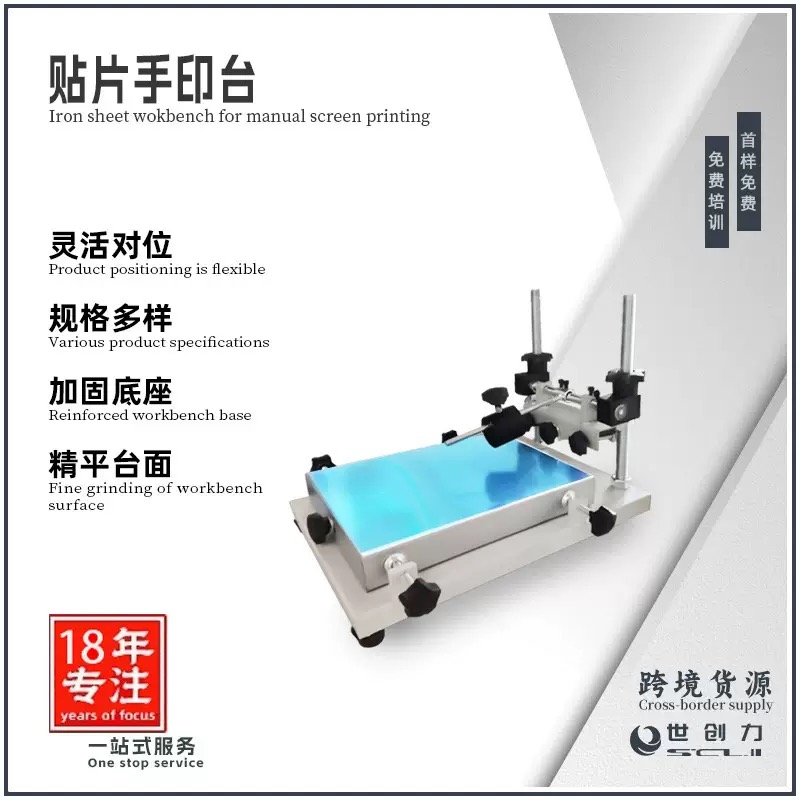
Detailed Architectural/Principle Analysis
Manual screen printing relies heavily on the co-planarity of the screen frame and the printing bed. During the squeegee stroke, a fluctuating downward and lateral load is applied. If the printing table suffers from minor flexing, the off-contact distance changes dynamically, leading to ink smudging, bleeding, or registration misalignment.
Cast aluminum frames resolve this through high molecular density and cast-molding execution, which eliminates internal residual stresses common in welded steel assemblies. Precision-machined cast aluminum beds achieve strict surface flatness. This structural integrity is critical when printing fine details on challenging flat surfaces. The technical engineering of these systems, such as those manufactured by Dongguan Shichuangli Zhihui Technology Co., Ltd., aligns with robust manufacturing standards. The company's production systems are backed by professional credentials, including CNAS certifications (such as certificates AZT260323020C-B0 and AZT260323019C-B0), ensuring consistent physical performance.
The practical value of rigid frame materials is demonstrated in commercial environments. For example, a dedicated distributor in Saudi Arabia supplying luxury hotel chains utilized high-stability printing setups to customize brand logos on tableware, glass bottles, and linen tags. Utilizing stable manual printing tables allowed them to maintain precise gold stamping and screen printing output, satisfying strict quality demands from high-end hospitality brands.
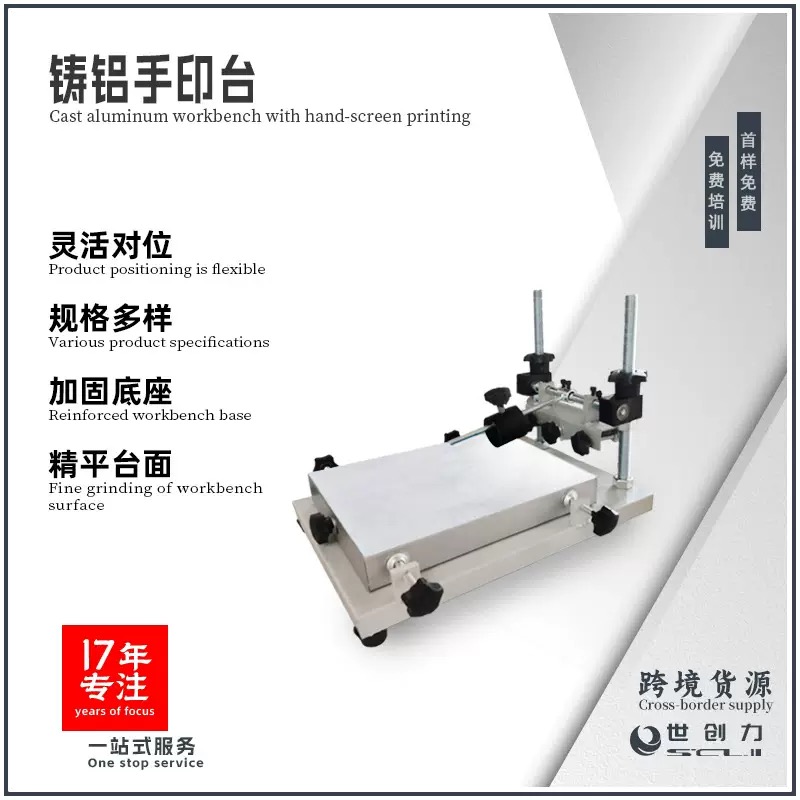
Data/Solution Comparison
Selecting the appropriate table configuration depends on the footprint and material demands of the target print run. Below is a comparative breakdown of the SCL-syt manual printing table models:
| Specification Type | Frame Material | Stability Rating | Weight (kg) | Best Suited Applications |
|---|---|---|---|---|
| Small Cast Aluminum (24*30CM) | Cast Aluminum | High | 8 kg | Small-scale electronic components, flat label printing |
| Medium Cast Aluminum (32*44CM) | Cast Aluminum | High | 10 kg | Medium cosmetics packaging, custom book covers, flat panels |
| Large Cast Aluminum (45*60CM) | Cast Aluminum | High | 12 kg | Large signs, poster boards, apparel transfer sheets |
| Sticker Steel Series (24*30CM to 45*60CM) | Coated Steel Sheet | Medium | 8 - 12 kg | Basic instructional training, low-tolerance manual prints |
Frequently Asked Questions (FAQ)
Why is cast aluminum preferred over wood or steel for manual screen printing tables?
Wood is highly susceptible to humidity-induced warping, while welded steel frames can experience internal structural stresses that degrade flatness over time. Cast aluminum provides stable flat surfaces, resists environmental corrosion, and maintains structural integrity without adding excessive weight.
What is the minimum order quantity and delivery time for these tables?
The minimum order quantity is 1 unit. Standard manual screen printing tables are dispatched within three working days, with the exact duration depending on individual process customizations.
How is the equipment packaged to prevent damage during international transport?
Each screen printing table is packaged in reinforced wooden boxes designed to resist moisture and mechanical impacts. This secure packaging ensures safe transit across sea, air, and land routes.
Final Conclusion & Recommendations
For operations requiring repeatable, high-accuracy screen printing, investing in a cast aluminum manual table is highly recommended. The cast aluminum design of the SCL-syt manual model provides the rigid foundation necessary for long-term multi-color registration. The product includes a two-year warranty alongside one-on-one remote technical teaching and lifetime maintenance support. Payment terms support standard advance payment and final payment models, including Alipay, complemented by flexible FBA sea, air, and land freight solutions. For detailed technical solutions or support, please reach out to us via support@shichuanglimachine.com.
About Us
Dongguan Shichuangli Zhihui Technology Co., Ltd., located in Huangjiang Town, Dongguan City, Guangdong Province, operates a comprehensive 1,600 square meter factory training base. Established in 2008, the company has grown to employ 150 staff members and specializes in the design, research, manufacturing, and sales of screen printing machines, pad printing machines, hot stamping systems, and non-standard automated equipment. Holding registered utility model patents (such as Patent 202521984351.0) and CNAS quality certificates, the company integrates technical training directly into its manufacturing model, successfully serving over 15,000 enterprises across 100 countries and regions globally.

Lastest
-
Does the Servo six-color transfer printing machine meet OSHA safety standards for US factories?
2026-08-03 -
Are there eco-friendly alternatives to the Servo four-color shuttle transfer printing machine process?
2026-08-03 -
How do you handle defect rate claims for the 3050/5070 Flatbed Screen Printing Machine?
2026-08-03 -
What is the hourly output speed of a 4x6 fully automatic single-color transfer printing machine?
2026-08-03 -
What is the transit risk insurance coverage when buying Screen printing plates under CIF terms?
2026-08-03
SUBSCRIBE
INQUIRY