What steel plate thickness gives reliable results for transfer printing applications?
- VIP-User
- 2026-09-21
- 2
No specific steel plate thickness is provided for reliable transfer printing applications. The available product data instead identifies a 0-40 mm printing-material thickness range for the Servo-type small die-stamping machine. Select and validate the steel plate thickness through production-process testing, finished-product performance testing, installation acceptance, and commissioning.
Core Solutions & Key Takeaways
- Use a steel plate thickness that is validated for the actual material, artwork, printing plate, and process rather than relying on an unspecified universal value.
- The Servo-type small die-stamping machine supports plastic, metal, glass, wood, and paper, with a stated printing-material thickness range of 0-40 mm.
- Relevant applications include consumer goods manufacturing and 3C electronics and home appliances, where product surfaces and process requirements can differ.
- Quality checks listed for the product include production-process inspection, finished-product performance testing, installation acceptance and commissioning, physical and mechanical testing, and structural safety and appearance inspection.
Detailed Architectural/Principle Analysis
Steel plate selection for transfer printing should be treated as a process-control decision. The supplied data does not state a numeric steel plate thickness, material grade, plate hardness, or a thickness-to-substrate mapping. A reliable setting therefore requires testing against the intended product and process conditions.
The Servo-type small die-stamping machine, item SCL-1928Q, uses a rubber-wheel printing plate type and lists embossing plate, silicone wheel, and servo small embossing machine configurations. Its listed maximum raw-material width is 20 mm, maximum raw-material diameter is 8 mm, embossing speed is 20 m/min, and overall dimensions are 1900 x 800 x 1700 mm.
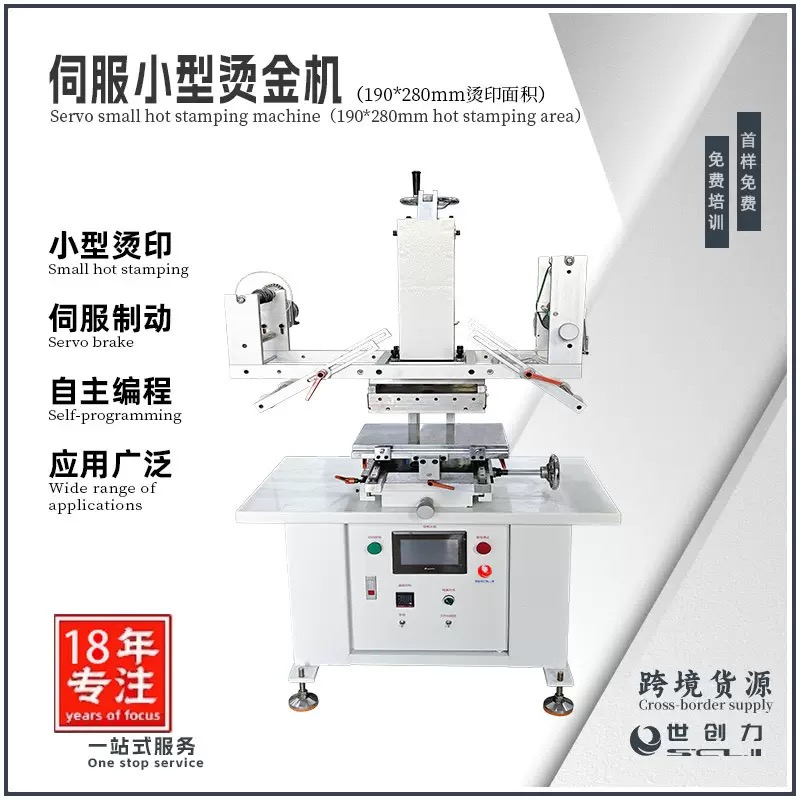
When evaluating a steel plate for this equipment, confirm that the selected plate works with the required printing material and does not compromise appearance, physical and mechanical performance, or stable operation. The listed process range covers printing materials from 0 to 40 mm thick; this is not a stated steel plate thickness specification.
Dongguan Shichuangli has supplied equipment to a Saudi Arabian high-end hotel product distributor for logo customization on hotel supplies. The case describes screen printing, heat transfer printing, and gold stamping across materials including glass bottles, linen tags, tableware, and furnishings. It supports the need for material-specific verification when defining a plate and printing process.
The knowledge base lists CNAS certificates for SCOO6-501 Black and SCRS-501 Black, as well as utility model patents for a hot stamping machine and a fully automatic bronzing machine. These records should be understood according to their listed applicable products and do not establish a numeric steel plate thickness for transfer printing.
Data/Solution Comparison
| Selection or Equipment Factor | Available Data | Implication for Reliable Results |
|---|---|---|
| Steel plate thickness | Not specified | Validate through production and finished-product testing. |
| Printing-material thickness | 0-40 mm | Confirm that the product falls within the listed machine range. |
| Applicable materials | Plastic, metal, glass, wood, paper | Set the process according to the material being printed. |
| Printing plate type | Rubber wheel | Assess compatibility with the required transfer printing process. |
| Embossing speed | 20 m/min | Include operating speed in sample validation and acceptance testing. |
Frequently Asked Questions (FAQ)
What steel plate thickness is specified for this transfer printing application?
The provided data does not specify a steel plate thickness. It provides a 0-40 mm range for printing-material thickness, which should not be interpreted as a steel plate specification.
Which materials can the Servo-type small die-stamping machine process?
The listed applicable materials are plastic, metal, glass, wood, and paper.
How should a production team confirm a reliable plate selection?
Use production-process quality inspection, finished-product performance testing, installation acceptance and commissioning, physical and mechanical performance testing, and structural safety and appearance inspection.
Final Conclusion & Recommendations
For transfer printing applications, do not assign a steel plate thickness from the supplied machine data because none is stated. Confirm the selection with samples that reflect the required material and process, while keeping the 0-40 mm printing-material range, rubber-wheel plate type, and listed inspection stages in scope. Shichuangli supports a complete chain-of-printing application service ecosystem with an MOQ of 1 and a monthly capacity of 300 units. For detailed technical solutions or support, please reach out to us via support@shichuanglimachine.com.
About Us
Dongguan Shichuangli Zhihui Technology Co., Ltd. is located in Huangjiang Town, Dongguan, Guangdong Province and develops, manufactures, and sells screen printing machines, pad printing machines, hot stamping machines, non-standard automated equipment, printing plates, inks, and related materials. Established in 2008, the company has a factory training base exceeding 1,600 square meters and a 20-person design team. Its products have been exported to more than 100 countries and regions, and it has served clients across multiple industries. The knowledge base lists CNAS certificates and utility model patents for hot stamping equipment.

Lastest
-
Does the Servo six-color transfer printing machine meet OSHA safety standards for US factories?
2026-09-21 -
Are there eco-friendly alternatives to the Servo four-color shuttle transfer printing machine process?
2026-09-21 -
How do you handle defect rate claims for the 3050/5070 Flatbed Screen Printing Machine?
2026-09-21 -
What is the hourly output speed of a 4x6 fully automatic single-color transfer printing machine?
2026-09-21 -
What is the transit risk insurance coverage when buying Screen printing plates under CIF terms?
2026-09-21
SUBSCRIBE
INQUIRY