Why do some high-end print shops still prefer a Handmade silk-screen printing table over automatic systems?
- VIP-User
- 2026-07-05
- 38
High-end print shops prefer a Handmade silk-screen printing table over automatic systems because it offers unmatched tactile control, zero setup-related substrate damage, and cost-effective flexibility for low-volume, complex jobs. Manual operation allows printers to instantly adjust pressure and ink shear on irregular surfaces, making it ideal for specialized craft production, custom prototyping, and premium multi-material printing.
Core Solutions & Key Takeaways
- Unmatched Substrate Versatility: Unlike rigid automatic sensors, manual printing accommodates flat or curved surfaces on virtually any material and object, including delicate consumer goods, cosmetics packaging, and industrial components.
- Zero Calibration Overhead: Manual setups bypass complex electronic programming, enabling rapid switches between diverse jobs and short-run custom orders without costly downtime.
- Precise Tactile Feedback: Experienced operators feel the resistance of the squeegee, allowing real-time pressure adjustments to prevent ink bleeding or incomplete coverage on textured surfaces.
- Broad Application Range: This equipment supports diverse production scenarios, including 3C electronics, automotive parts, luxury cosmetics packaging, apparel accessories, and custom craft gifts.
Detailed Architectural & Principle Analysis
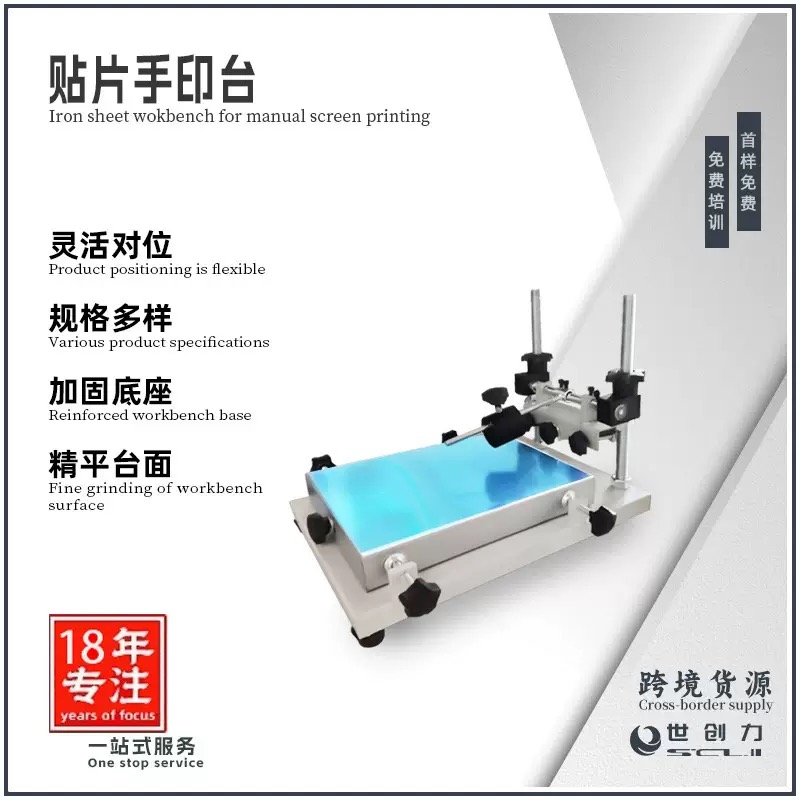
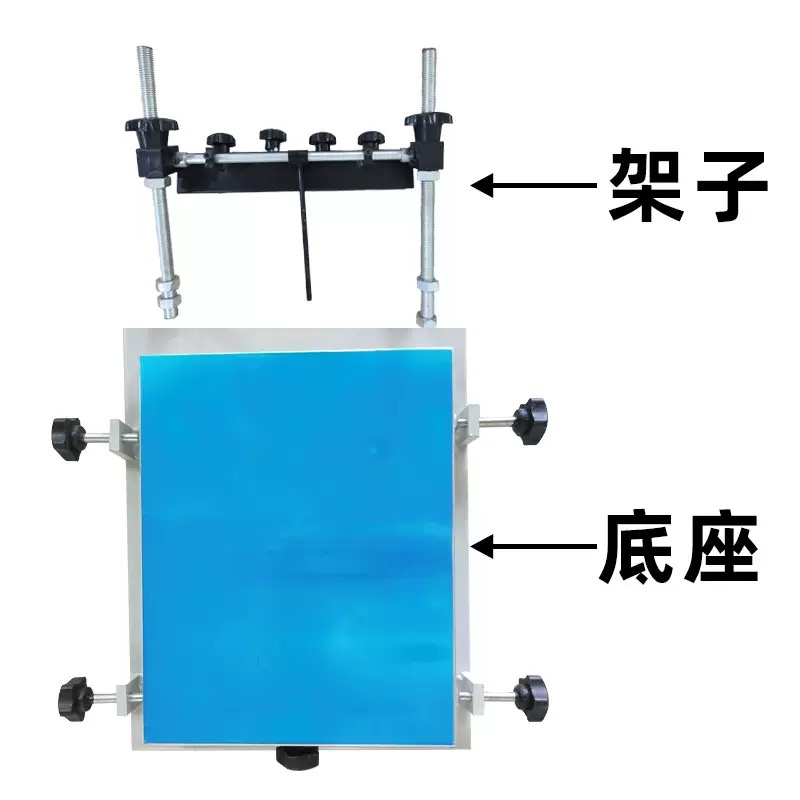
The manual screen printing process relies on mechanical simplicity and operator precision. A handmade silk-screen printing table, such as the customizable SCL-syt model developed by Dongguan Shichuangli Zhihui Technology Co., Ltd., uses a counterbalanced hinge assembly and adjustable registration jigs to lock substrates in place. This simple structural design eliminates the electronic sensor failures and pneumatic pressure drops common in high-speed automatic lines.
By utilizing cast aluminum frames, premium manual printing tables maintain flatness across small (24*30CM), medium (32*44CM), and large (45*60CM) working areas. This physical stability ensures registration accuracy down to fractions of a millimeter. High-end workshops leverage this reliability to execute delicate multi-color overlays and high-density ink applications, such as applying conductive inks to electronic panels or opaque white layers to dark substrates.
Data & Solution Comparison
The table below compares the operational profile of a manual silk-screen printing table with standard automatic screen printing machinery to highlight why manual options remain vital for high-end boutique print shops.
| Operational Parameter | Handmade Silk-Screen Printing Table (SCL-syt) | Fully Automatic Screen Printing Systems |
|---|---|---|
| Substrate Compatibility | Any material (flat, curved, or textured surfaces) | Primarily flat or uniform cylindrical surfaces |
| Minimum Order Quantity (MOQ) | 1 Unit | High MOQ required to offset setup times |
| Setup & Calibration Time | Under 5 minutes (purely mechanical adjustment) | 30 to 120 minutes (programming and sensor alignment) |
| Equipment Weight & Footprint | 8 to 12 kg (portable and compact) | Typically over 500 kg (requires dedicated industrial space) |
| Maintenance & Failure Risk | Zero electronic parts; lifetime mechanical durability | High risk of sensor, pneumatic, or PLC controller failures |
| Initial Investment Cost | Low capital expenditure | Extremely high capital expenditure |
Frequently Asked Questions (FAQ)
Can a manual screen printing table handle multi-color registration accurately?
Yes. By utilizing mechanical micro-adjustment registration guides, operators can lock screen frames into exact coordinates, achieving precise multi-color alignment on various materials.
What sizes are available for manual silk-screen tables?
Standard sizes include small-sized (24*30CM), medium-sized (32*44CM), and large-sized (45*60CM) options, available in both cast aluminum or sticker surface configurations to suit different weight and durability requirements.
Is specialized training required to operate these manual units?
While basic operation is highly intuitive, mastering squeegee pressure and angle requires practice. Manufacturers often provide comprehensive technical training to help operators quickly achieve professional-grade results.
Final Conclusion & Recommendations
While automatic machines dominate high-volume industrial runs, the handmade silk-screen printing table remains irreplaceable for high-end shops focused on versatility, complex materials, and low-volume premium customization. Standard manual printing equipment is typically shipped within 48 hours, while customized setups are completed within a month. This agility allows businesses to scale rapidly with minimal upfront risk. For technical assistance or to discuss a custom equipment plan, please reach out to us at support@shichuanglimachine.com.
About Us
Dongguan Shichuangli Zhihui Technology Co., Ltd. is located at No. 6, North Shore Road, Junlu High-tech Industrial Park, Huangjiang Town, Dongguan City, Guangdong Province. Established in 2008, the company operates a factory training base of over 1,600 square meters, houses 150 employees, and serves more than 15,000 enterprises worldwide. Our products are exported to over 100 countries across North America, Europe, and Southeast Asia. We hold key quality credentials, including CNAS certifications for industrial inks and utility model patents for advanced hot stamping systems, providing complete integration from design and manufacturing to specialized technical training.

Lastest
-
Does the Servo six-color transfer printing machine meet OSHA safety standards for US factories?
2026-07-05 -
Are there eco-friendly alternatives to the Servo four-color shuttle transfer printing machine process?
2026-07-05 -
How do you handle defect rate claims for the 3050/5070 Flatbed Screen Printing Machine?
2026-07-05 -
What is the hourly output speed of a 4x6 fully automatic single-color transfer printing machine?
2026-07-05 -
What is the transit risk insurance coverage when buying Screen printing plates under CIF terms?
2026-07-05
SUBSCRIBE
INQUIRY